Friday, December 25, 2009

New Project!!!!


Professio by Matt Henson, Inc. is pleased to announce that we have started work on the precious Hipolito F. Garcia Federal building and U.S. courthouse located directly across the street from the Alamo in San Antonio Texas. We are proud to be a part of the team that The Beck Group put together for the restoration of this stately building.  We are responsible for protecting and restoring the historically significant interior portions of the building including the ornamental plaster, flat plaster, decorative paint finishes and protecting the large Howard Cook fresco mural in the entry lobby. See the photo.

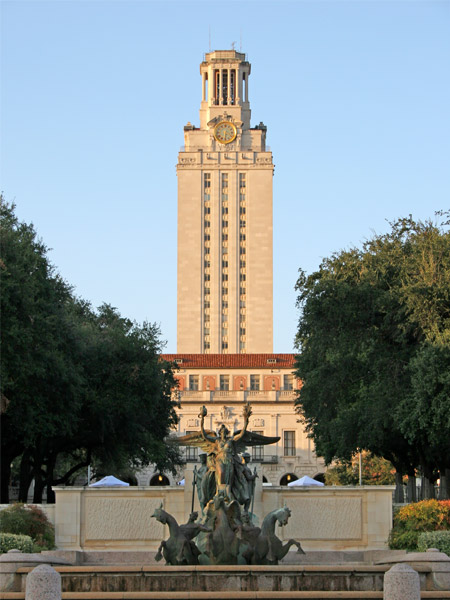
One of our first tasks is to do an analysis of the original paint finishes. This will require careful removal of the paint to expose the first layer without damaging the surface of the subsequent layers of paint, thus giving us the opportunity to color match the paint that will be applied to these areas. It never ceases to amaze me that when all the original colors are put back into their places, these old buildings just seem to come back to life. All the elements from the chandeliers to the mechanical grill covers to the tile floors will once again work in concert to bring back to life the genius of designers Ralph Cameron and Paul Cret. Paul Cret is best known in Texas as the designer of the Main building and Tower on the University of Texas campus in Austin Texas.

Another part of our contract is protecting the mural. This mural is one of the largest frescoes in the United States. It can be easily damaged by dust created during reconstruction. Most of the dust around job sites come from cutting and sanding. Most of the surfaces are alkaline such as concrete, masonry mortars, plaster, drywall and drywall mud. We have to install protection over the mural to insure that these elements will never come in contact with the fragile paint surface. The protection will also have to be installed in such a way that it will not damage the surface. Delicate work with lots of precautions. Extra levels of caution are in order here and we will have professional conservators inspecting and advising on the work through the process.

Next we will need to devise a plan to cut into the existing plaster finishes to provide access to run new electrical systems, fire alarms, and fire sprinkler piping. We will be researching the framing and structural elements and develop a plan that will minimize the destruction of historic fabric and prevent causing additional damage. A lot of restoration projects fail to do this and disaster happens. Without due diligence, a structural ceiling could fail resulting in a loss of historically significant elements as well as risking the lives of workers below.

As you can see, it takes a lot of preplanning and looking at all the possibilities of failure and providing safeguards to create a environment where we are reasonably comfortable that, beyond an acute catastrophe, the building will be safe from any additional harm.

We will keep you informed on our process including photos if the GSA will let us.

Wednesday, December 9, 2009

Crown of the Capital


Harris county courthouse continues. Even though we here at Professio have lots of projects going on, we are still hard at work getting all the ornamental plaster pieces ready for installation. Here I’m carving the very top of the large capital that will set high up in the rotunda.  I’m carving it out of clay and the design comes from other elements found in the courtroom. Notice the leaves are very deep. This unit will be located some 30 pluse feet from the first level you can view it from. And it will needs to be deep so that the designs can stand out from that distance.

After finishing the carving we will make a rubber mold of the element and then cast the four pieces out of gypsum plaster. Installation is scheduled to start soon and unfortunately the large capital may be the very first piece we are to start on. So the presser is on to get this piece and the large capital carved and into production.

I will update you again as we make the mold of this peace

Monday, November 23, 2009

Who would'a thunk? (A true West Texas saying)


Sometimes the universe just seems to want to give you a gift and graces you with a blessing beyond words. This happened to me a few weeks back. I had received a call from Johnny Langer of Source Historical, who is a great friend and trusted colleague concerning an item that had been found while he was in Hamilton Texas researching the original color scheme of the Hamilton County courthouse. He calls me all excited but not really wanting to tell me too much. He said they think they found the original bas-relief sculpture that legend said stood behind the judge’s bench. I say legend because there is no notation on the original plans for the sculpture. He and Gordon Marchant (architect),and  the County Judge were looking at it and discussing it. He said I should be getting an invitation to give my professional assessment of the sculpture. He added “and you will get and additional surprise. I’m not saying but ask about the Picasso. That’s all I’m going to say.”

Well the call finally came from Bill Wilson of RBR construction. I’ve known Bill Wilson for some time and have a high degree of respect for his abilities to manage restoration projects. ( a job that is really harder than it looks). He gave me the name of Francis and Ray Ramsey and their phone numbers. He said it is located in a storage room on the 2nd floor of their art gallery. He added. “That is all I’m going to tell you because you need to experience it just as the rest of us were able to experience it.”

I called and left messages on all the phone numbers that I was given and waited for a return call. After a couple of days a very gracious lady returned my call and we discussed when would be a good time to come by and inspect the sculpture, a Friday after lunch. It was on my way back from Austin to Lubbock. So I thought I would stop by and inspect and photograph it and then be on my way back to Lubbock. Should not take more than an hour, or so of my time.  Boy was I wrong!

I arrived in Hamilton a little early and stopped for lunch awaiting the arrival of the Ramsey’s.  Hamilton is a small town of 3 thousand or so, in the middle of ranch country about 80 miles north east of Austin Texas. It is on two somewhat major crossroads so I have driven through the town several times in the past but never stopping. On the front door of the building it list “shown by appointment only” with phone numbers underneath. I could see through the glass into the dark room beyond that it was filled with paintings.
Soon a car drives up and a lady waves at me through the window. After parking Mrs. Ramsey walks up to the front of the building to meet us.  Her husband Ray is coming through the back of the building and is opening up the front door from the inside. We are already talking about the sculpture, its history, its travels, and how it came back to Hamilton. So we are walking through a Gallery full of art but I’m focused on the story and as she is talking she is leading me to the back and up the stairway to the room where the Sculpture is stored.

After doing my investigation work and photographing the sculpture. I head down to the first floor where the gallery owners are talking to my friend and from the look on her face I realize that she is amazed.  They have now turned on the overhead lights and the room literally is filled to the brim with art work. But not just standard western art that you always seem to find in small western ranch towns but from all the old art masters.  Renoir, Van Gogh, Rembrandt, Monet, artist from French impressionist, to Constructivism, from the Byzantine area, to Art Nouveau, to Andy Warhol.  Some of whom I have never heard of but now know how valuable they are. So after and brief tour I say “I heard a rumor that you have a Picasso.”

“A Picasso?” She turns and opens a door turns on a light “We have almost a whole room filled with Picasso’s.”

Speechless I step into the room and look at all different eras of Picasso’s life from simple sketches to sculptures. There might not have been hundreds but there was certainly more than thirty.

So for the next few wonderful hours I get to experience all this incredible art, and get a personal tour from two very passionate and well versed art lovers. A collection that rivals any personal collection I have ever seen even rivals most museums and located in a most unlikely place in the heart of Texas.

If you are looking for a great place to see art and want to see it up close and personal. Head to a true art capital - Hamilton Texas. The number is on the door. Ray and Francis Ramsey love to show off their art and it will be a day you will never forget. Information about the collection can be found here.

My report on the Lady Justice sculpture can be viewed here.

Sunday, November 8, 2009

Time out to Learn

Last week I attended the APTI conference in Los Angeles.  The Association of Preservation Technology International is a great organization of professionals involved in the restoration of our heritage in the built environment. Attendees were architects to trades men, from educators to art conservators from all over the United States Canada and South America, all there to learn from each other and share their findings. There were papers presented from Adobe restoration to saving public murals to drying wet buildings. Papers are presented on projects showing what the challenge was and the procedure followed to try and resolve the issue. Some have no easy solution and more study is needed but we all learn from both success and failures.
One of the best things in this institution is the evolvement of students. The organization has collage students who are studying preservation in collage present case studies that they are working on. It gives me much confidence in the talent that is coming out of the universities that have preservation studies.
I wish that all professionals involved in restoration would attend these conferences but sadly most do not. You have to ask though would you want a firm working on your historical building that is not keeping up with all the issues that affect the restoration of these buildings especially in the light of how some restoration efforts in past have resulted in increased damage to the buildings instead of preserving them.

Thursday, October 29, 2009

"Man That is One Big Capital!!"


We continue to work on the Large capital that graces the top of the atrium on the Harris County Courthouse. Here I’m carving out the large “Shield” that is in the center. The scale is so large that it makes it difficult to build up the depth that I need. In the back ground you can see the drawing that my son Matt2 produced and which has been approved by the Susan with Architexas the architect and the Texas Historical Commission.
This shield is very Sulivanistic in style and you can see the influence of Luis Sullivan on the original designer. Sullivan loved to use what he called stretched fabric complete with ripples. On either side of the shield we will need to carve very deep and intricate leaves. Sullivan loved to make his designs come alive and used nature in very intricate detail to create this.
We also still have to create the top cresting. That cresting will extend another 14 inches up above the top of capital and protrude another 8 inches out toward the center of the room. This will allow the crest to be seen from the ground or in this case the 2nd floor which will be at least 50 feet below the capital.
I realized something yesterday. I will have spent some 80 pulse hours carving the missing area on the capitals.  I have already spent 40 hours creating the side molds of the existing pieces. The shop spent 20 or more hours casting the existing pieces and building the mockup form. Matt 2 my son spent 20 hours creating the drawings and getting them approved.  I will spend at least 30 plus house creating the rubber mold.  All of that work to cast only 4 capitals. Then after this project is complete we will start destroying the mold and the mockup.  That is 110 hrs of time on something that will ultimately be worthless. There is just no way anything this large will ever be used again and it takes up way too much space to save. It is a little disconcerting but I guess the whole object is to recreate the missing capitals. 

Saturday, October 24, 2009

Oh Crap Calsimine!!!


Two weeks ago I traveled to Halletsville Texas to look at a restoration project we are starting. The beautiful Romanesque Revival styled Lavaca County Courthouse was built in 1897 with plans drawn by Eugene T. Heiner.
The restoration program and plans was created by The Williams Company. I’ve worked on quite a few projects with the Williams company and Kim Williams and his associates are well versed in all aspects of restoration and very professional.
The construction manager is Weaver & Jacobs Constructors Inc. of Cureo Texas, While they have not done a lot of restoration projects,  I’m impressed so far with their approach and the project is proceeding very well. In fact it is 5 weeks ahead of schedule which is almost unheard of on these types of projects.
While examining the plaster surfaces on the project I found an issue that has become all too common in restoration. (See Video) the walls at some point were painted with calcimine paint. The English name for this paint is distemper. It is made from finely ground Calcium Carbonate (calk) mixed with a glue binder. Not to be confused with lime paint which was created using calcium oxide or quick lime. The calcimine paints were designed to be mixed with a binder or glue while Lime paints were mixed with water. Calcimine paints mixed with water would not ever get hard but would seem fine at first. According to an old Scottish painter friend of mine Calcimine paints were used in the trades mostly to paint ornate plaster moldings. This allowed them to remove the paint every easily the next time they wanted to paint the moldings and the paint would not build up on the surfaces hiding the intricate detail. However as the practice continued painters would start using the calcimine paint mixed in water to paint the flat walls and ceilings it was much cheaper to use water than glue and cheaper than lime paint which is what traditionally would have been used on the big flat walls and ceilings. Some might have used a little glue in the mix.  Since it was cheap and looked good after the project was complete the practice continued.
Enter oil based paints. Now painters were used to just painting over the surfaces without removing the old paints a practice that was common with painters used to working with calcimine paint. Now you have a film of paint that is somewhat adhered to the calk paint. Layer after layer of paint applied as the building got redecorated. But if any water got back down into the chalky paint it would quickly release. Once it started to release the paint would peel away and because one understood what this chalky surface was sometimes the plaster surface was blamed. Painters said that the old plaster was deteriorating and they could paint the surface. So drywall was installed over the plaster.
That was probably what happened here in Hallettsville. The original plaster surface is fine though not as hard as modern plasters it is in good shape. We just need to remove the calcimine paint repair the holes where the sheetrock was attached to the surface and get this grand old building back to its original beauty.

Wednesday, October 21, 2009

Robert’s County Courthouse Mockup


In an effort to help visualize the area where the entablature will occupy on the Roberts County courthouse we built a small wall and ceiling to represent the area. The drywall represents the plaster wall surface. The ceiling rises off the wall at a 70% angle and the missing area is the area we need to recreate the ornamental work. The size of the area missing came from a report that was compiled by Johnny Langer of Source Historical. Just to remind you the area in question has been totally lost except for a few small pieces that we are using to try and figure out what was there. (see Roberts county courthouse, and look these pieces fit together)


We installed the bead and read molding we recreated alone the top ceiling edge and the bottom wall edge. We also hung loosely the fascist leaf band along the top against the bead and read. We know the bead runs along the bottom of the entablature because parts of it are still attached on site. The top area is surmised because we have a piece of the fascist band that is attached to a bead and read and has been cut on a 45% angle that could only mean that it was attached to the ceiling. The angle could not have been used along the wall unless the band somehow turned and went up the wall which there is no change in heights in this courtroom and thus no way that would have been done.

But we still have a large area in which to fill in. Matt2, my son and president of Professio, came up with the idea that they might have run the fascist band along the bottom also so we hung a piece there running in the opposite direction. That still leaves us with a very large area. We know that there is an area where a "piano key" molding consisting of arches that run vertical along the face of the molding and an additional 2" molding running along it somewhere but where?

We called the Architect Michael Roberts of Preservation Associates to come by and advise. After looking at the items in question he said that he felt that two runs of the factious molding was too much and makes the entablature to busy. He would like us to take pictures of the mockup with the two in place and one without the bottom in place and then start drawing several other options to fill in the remaining area. Then he can submit it to Lyman Labry with the Texas Historical commission to start discussions. I also stated that I would like Johnny Langer also involved because of his extensive knowledge of designs used in this period. The more eyes we can get looking at this problem the better.

It will be a long and sometimes contentious ordeal. People can be quite passionate about these types of issues but in reality you would not want anyone involved in this that was not passionate. It makes for a much better result even thou not everyone will agree on the ending design. And to be honest I love the discussions that are about to develop. I have a mentor a long time ago that I remember saying after a long heated discussion."Wow! Who would have thought people could be so passionate about whether a leaf bends right or left it is just a fricking leaf for God's sake!" But it does make a difference and when people look at the final design they will never really understand the painstaking effort it is to recreate it.